Lovable Review (2026): The Easiest AI App Builder?
Lovable is the easiest way for a non-developer to ship a real web app with a database, logins and hosting. This Lovable review covers what changed in 2026 (Chat mode, /goal, Drafts, automatic tests), how credits really work, what each plan gets, common complaints, and when Replit, Bolt or v0 is the better pick.
Lovable review verdict: Lovable is the best AI app builder for non-developers who want a working web app with sign-ups, a database and hosting, without touching infrastructure. You describe the app, it builds the frontend and backend together, and you publish in one click. It is a great fit for founders validating an MVP, operators building internal tools and designers turning ideas into clickable products. Skip it if you need a native App Store app, want a fixed and predictable monthly bill for heavy use, or are a developer who would rather work in an editor.
Lovable shipped a remarkable amount in 2026: Chat mode, long-running /goal builds, Drafts, automatic tests, a redesigned security view, a mobile app and dozens of connectors. This review explains which of those changes matter and what the credit system really costs. It is based on Lovable's official documentation, changelog and pricing pages, plus public user feedback, as of October 2026. We did not run hands-on benchmarks. Plans change often, so confirm on Lovable's plans page before you buy.

Lovable at a glance
What it is: a chat-based AI app builder that writes full-stack web apps and hosts them.
Best for: non-technical founders, product managers, designers, marketers and small teams.
Stack: React, TypeScript, Vite, Tailwind CSS and shadcn/ui on the frontend; Lovable Cloud (database, auth, storage, edge functions) on the backend.
Pricing: Free with 5 daily credits (capped at 30 a month). Pro from $25/mo, Business from $50/mo, both from 100 monthly credits. Annual billing gives two months free.
Code ownership: Git sync with GitHub, GitLab or Bitbucket on every plan; editing and downloading code on paid plans.
Biggest strength: the shortest path from an idea to a live app with real users and data.
Biggest weakness: credit usage varies by task, and complex apps can burn through credits fast.
What is Lovable, and what changed in 2026?
Lovable is a Stockholm-based AI app builder. You type an idea into the prompt box, it generates an app in a live preview, and you keep chatting to change it. When a feature needs a backend, such as user accounts or file uploads, it switches on Lovable Cloud and sets it up for you. When you are happy, you click Publish and get a lovable.app address, or connect your own domain on a paid plan.
The 2026 changelog shows a product moving from "prompt to prototype" toward "prompt to production". The changes that matter most:
Chat mode and Chats (September): talk through ideas inside a project, or in standalone chats, without changing any code. Voice conversations are supported.
/goal (August): set a goal for one message and Lovable keeps working for up to 10 hours without stopping to ask questions.
Drafts (September): try risky changes in a separate copy of a project, then compare and restore plan revisions.
Testing that runs itself (September and October): Lovable can sign in to test pages behind your app's login, and it writes and runs tests when you change rules such as prices or permissions.
Safer databases (October): Cloud database changes are recorded as Drizzle migrations, and changes that could break a published app are refused by default.
Security view redesign (September): quick and deep security scans per project.
Mobile app (April): build and edit projects from iOS and Android, alongside the desktop app.
Governance (October): workspace credit limits and alerts, publishing approvals, SIEM export of audit logs and IP allowlists for API keys.
Lovable's key features, in depth
Chat, Plan and Build modes
Lovable now has three ways to talk to it, and you can switch at any time without losing the conversation. Chat mode is for deciding what you want; it never touches the code. Plan mode investigates your project and writes a plan you can edit and approve before anything is built, at 1 credit per plan message plus any research it triggers. Build mode is the default: it implements and verifies changes end to end, priced by how much work each request takes.
For large jobs, /goal tells Lovable to keep going until a goal is met. It is powerful but expensive, so Lovable adds check-ins: when one message crosses 20 credits (the default, adjustable from 20 up), it pauses, shows the cost so far and asks whether to continue. You can also send follow-up messages while Lovable works instead of waiting for it to finish.
Visual edits and design systems
Not every change needs a prompt. The preview toolbar lets you select an element and describe the change, or edit text inline by typing on the page. You can attach screenshots as visual references, remix a template or start from an existing URL. Pro adds design systems, so every new project starts with your brand's components and styles, and Business adds design templates. Groups can set a default design system that members get preselected.
Lovable Cloud: the built-in backend
This is Lovable's biggest advantage over most competitors. According to the Lovable Cloud docs, each project gets a Database with a table and record editor, Users for sign-ups and sign-in methods (including Google and, since October, OIDC), Storage for files, Edge functions for server-side code such as webhooks, Jobs for scheduled tasks, Secrets for API keys and Logs for debugging. Lovable says Cloud is built on Supabase's open-source foundation.
Two caveats. You choose a hosting region (Americas, Europe or Asia Pacific), and it cannot be changed once the backend is enabled. And removing the database permanently deletes data, user accounts and stored files. If you want direct control, Lovable can now create a Supabase project for your app, or you can connect your own from the start.
AI features inside your app
Lovable's AI gateway lets the apps you build call AI models without separate API accounts. The changelog shows a fast-moving lineup in autumn 2026, including GPT-6 models, Gemini 4 Argon, Claude models (no Anthropic account needed), speech-to-text, music and image and video models. Usage is billed from your Lovable credits at rates that follow each provider's model costs, with a small monthly AI grant on every plan.
Security scans and testing
Lovable runs automated security checks on your database and now offers quick and deep scans from a project's Security view, with scheduled scans on Enterprise. Lovable is clear that these checks are not a full audit. Combined with the new automatic tests and refused breaking migrations, it is meaningfully safer than a year ago, but anyone handling payments or personal data should still have a developer review access rules before launch.
Git sync, instructions and connectors
Projects sync to GitHub, GitLab or Bitbucket on every plan, so the code lives in your own repository. Instructions (formerly Knowledge) hold up to 10,000 characters of persistent guidance at project and workspace level, and Lovable also reads AGENTS.md and CLAUDE.md files in your repo. Connectors link apps to services such as Stripe, Canva, WhatsApp Business, Klaviyo, Zendesk, Neon and n8n, and Lovable's MCP server lets outside AI tools, including Claude, work with your projects.
Lovable pricing in 2026: what each plan gets
Lovable bills in credits. Here is what each plan includes as of October 2026, from Lovable's plans and credits and usage docs.
| Plan | Price | What you get |
|---|---|---|
| Free | $0 | 5 build credits a day (max 30 a month), a daily chat allowance, monthly grants of 20 Cloud, 4 AI and 1 connector credit, unlimited members, Git sync; no code editing, downloads or custom domains |
| Pro | From $25/mo ($250/yr) for 100 credits; tiers up to 10,000 credits ($2,250/mo) | Daily credits with no monthly cap, a larger chat allowance, rollovers and top-ups, code editing and downloads, custom domains, badge removal, design systems, roles, per-member credit limits |
| Business | From $50/mo ($500/yr) for 100 credits; tiers up to $4,300/mo | Everything in Pro plus SSO, design templates, personal projects, Lovable API, password-protected previews, security center, commit attribution, DPA, data excluded from AI training by default |
| Enterprise | Custom | SCIM, audit logs, data exports, scheduled security scans, EU inference, publishing controls, dedicated support; no daily allowances or grants |
How Lovable credits really work
Build mode is usage based, so cost depends on the change. Lovable's own examples: making a button gray costs about 0.50 credits, removing a footer 0.90, adding authentication 1.20 and a landing page with images 2.00. A request you stop before it changes anything is free. Plan messages cost 1 credit, and /goal runs cost noticeably more than standard builds for the same work.
Credits are spent in a fixed order: daily allowances and grants first, then the general credits that expire soonest. Monthly plan credits roll over while you stay subscribed and expire two months after issue; top-ups last 12 months. Hosting, the database and AI calls in your app draw on Run credits from the same balance once the monthly Cloud and AI grants are used. One detail to watch: Lovable labels its current per-message chat pricing as temporary through October 31, 2026, so check the credits page for what replaces it.
Is it expensive? For a solo builder making a focused MVP, Pro at $25 a month is often enough. For complex apps, or anyone who lets the AI loop on a bug, costs climb quickly. Set per-member limits and usage alerts, which arrived for workspaces in October.
Pros and cons
Pros
Easiest full-stack builder for people who do not code.
Lovable Cloud gives you database, auth, storage, functions, jobs and logs with no setup.
Chat, Plan and Build modes separate thinking from building, which saves credits.
Safety features: Drafts, version history, refused breaking migrations, automatic tests and security scans.
You own the code through Git sync to three providers.
Team friendly: unlimited members on every plan, so you pay for usage rather than seats.
Cons
Variable credit costs make heavy use hard to budget.
Web apps only: no native iOS or Android output.
Code editing and downloads require a paid plan.
Region lock and migrations: the Cloud region is fixed once enabled, and moving off Cloud takes manual work.
Limitations and common complaints
Lovable has a 4.2 out of 5 TrustScore from roughly 1,900 reviews on Trustpilot as of October 2026, with a clear split: most reviewers love it and a vocal minority are frustrated. Praise centers on ease of use, speed and polished design. The recurring complaints:
Credits drain faster than expected, especially when Lovable struggles with a bug and each attempt costs more credits.
Bugs that come back after a fix, and occasional platform errors on larger projects.
Support quality, with complaints about slow responses and an AI support bot.
Lock-in worries: apps depend on Lovable Cloud, and migrating data, auth and storage elsewhere is a project in itself.
No native mobile path: the Lovable mobile app lets you build on your phone, but the apps you build are still web apps. Store listings need a wrapper such as Capacitor.
Most of these can be managed. Plan before you build, make one change per prompt, use Drafts for risky work, and restore a working version from history rather than asking for the same fix again. Our step-by-step guide to building an app with Lovable covers those habits.
Lovable vs the alternatives
| Tool | Best for | Backend | Mobile | Paid from (as of October 2026) |
|---|---|---|---|---|
| Lovable | Non-developers shipping web apps | Lovable Cloud built in | Web and PWA | $25/mo |
| Replit | All-in-one with a real IDE | Built-in database and storage | Expo, iOS App Store flow | $20/mo |
| Bolt.new | Flexible browser workspace | Bolt Cloud database | Expo | $25/mo |
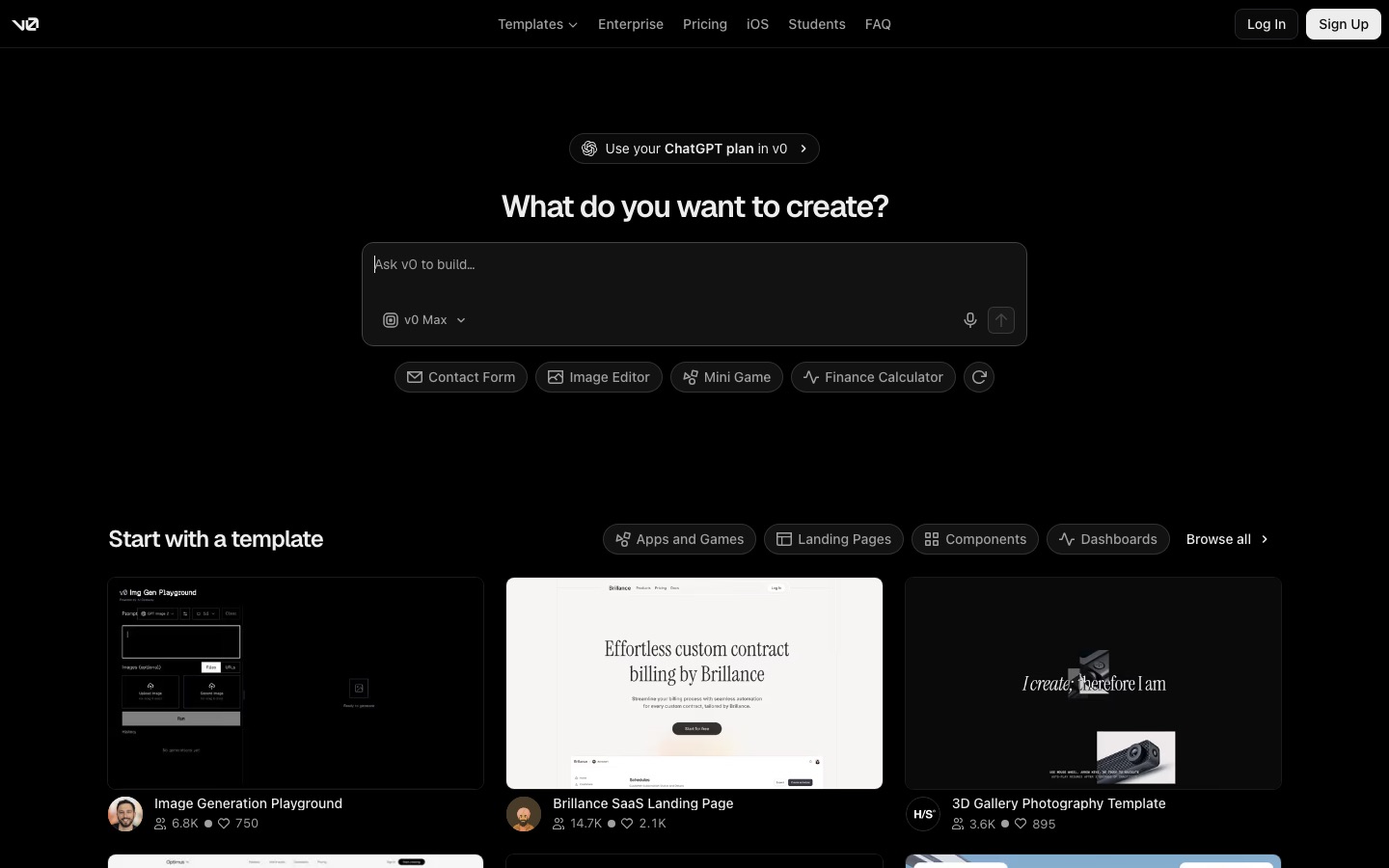
| v0 | Next.js teams on Vercel | Via Vercel integrations | Web | $30/user/mo |
| Base44 | Internal tools and simple apps | Built in | Web | $20/mo ($16 annual) |
Lovable vs Replit: Replit gives more control, a full IDE and native mobile apps with an App Store flow; Lovable is easier and hides more of the machinery. See our Replit review.
Lovable vs Bolt and v0: Bolt.new suits builders who want to see the code environment and pick a framework, while v0 fits teams already on Next.js and Vercel. Our Lovable vs Bolt vs v0 comparison goes dimension by dimension.
Lovable vs Base44: Base44, owned by Wix, is even more no-code and works well for internal tools. Its Free plan includes 25 message credits a month, and GitHub integration starts on the $50 Builder plan.
Lovable vs Cursor and Claude Code: developers usually get more from an AI editor such as Cursor or a terminal agent like Claude Code. Many teams prototype in Lovable, then move the synced repo into one of those. Compare them in Claude Code vs Cursor, or see every option in our list of the best vibe coding tools.
Who should use Lovable?
Non-technical founders validating an idea: yes, this is exactly what it is built for.
Product managers and designers prototyping: yes. Turn a spec or screenshot into something people can click.
Small businesses building internal tools, such as booking systems, CRMs or dashboards: yes.
Teams with compliance needs: Business or Enterprise, for SSO, training opt-out, audit logs and SOC 2 Type II and ISO 27001 coverage.
Anyone who needs an App Store app: look at Replit, Bolt or Anything instead.
Developers on an existing codebase: use Cursor, Claude Code or GitHub Copilot.
FAQ
Is Lovable free?
Yes, Lovable has a free plan with 5 build credits a day, capped at 30 a month, plus a daily chat allowance and small monthly grants for Cloud, AI and connectors. You can build, publish and sync to GitHub on Free. Code editing, downloads, custom domains and badge removal need Pro, which starts at $25 a month.
How much does Lovable cost?
Pro starts at $25 a month for 100 credits and scales to 10,000 credits. Business starts at $50 a month for 100 credits and adds SSO and governance. Annual billing gives two months free. Because Build mode is usage based, simple edits cost under 1 credit while big features cost more, so your real spend depends on how you build.
Is Lovable worth it?
For non-developers who need a working web app with logins and data, yes. Nothing else gets you there faster with less setup. It is less worth it for developers, who get more control from Cursor or Claude Code, and for native mobile apps, where Replit and Bolt have Expo support. Try the free plan on one small app first.
Can Lovable build mobile apps?
Lovable builds responsive web apps that work well on phones and can be installed as a progressive web app. It does not generate native iOS or Android apps for the app stores. The Lovable mobile app, launched in April 2026, is for building projects from your phone. For store-ready apps, consider Replit or Bolt, which use Expo.
Does Lovable use Supabase?
Lovable Cloud, the built-in backend, is built on Supabase's open-source foundation, so most projects never need a separate Supabase account. If you want direct control, Lovable can create a Supabase project for your app or connect one you already have. Decide early, because moving from Cloud to your own project later is a manual migration.
Can I export my code from Lovable?
Yes. Every plan includes Git sync with GitHub, GitLab or Bitbucket, so your code lives in a repository you control. Paid plans also let you edit and download code directly in Lovable. The code is standard React and TypeScript, so any developer or AI editor can keep working on it.
Is Lovable secure?
Lovable holds SOC 2 Type II and ISO 27001, runs automated security checks and offers quick and deep scans. Those checks are not a full audit, and AI-built apps can still ship weak data access rules. Before launching anything with payments or personal data, have a developer review authentication and database permissions.
Final verdict
Lovable is the easiest AI app builder in 2026 and the best starting point for non-developers who want a real web app. Lovable Cloud removes the hardest part of building software, and this year's additions (Chat mode, Drafts, automatic tests, safer migrations and security scans) make its apps more trustworthy than ever. The trade-offs are variable credit costs, web-only output and some platform dependence. Start on Free, plan before you build, and upgrade to Pro once you have an app worth putting on its own domain.
Explore every AI app builder and coding tool we track in the AI coding category, or browse design tools for the visual side of your product. Built something Lovable users should know about? Submit it for a listing.