Claude vs Gemini (2026): Which AI Assistant Fits Your Work?
Claude is the stronger pick for writing, careful analysis and agentic coding with Claude Code. Gemini is the better value if you live in Gmail, Docs and Android, want image and video generation, or would pay for Google storage anyway. Here is how Claude Opus 5.5 and Gemini 4 Argon compare on price, features and privacy.
Short verdict: in the Claude vs Gemini matchup, choose Claude if your work is mostly writing, analyzing documents or coding, and you want the most careful, natural-sounding answers plus Claude Code in the same $20 plan. Choose Google Gemini if your day runs on Gmail, Docs, Drive and Android, if you want image and video generation in your assistant, or if 5 TB of Google storage makes the $19.99 AI Pro plan a bargain. On model quality the two are close; on product scope they are very different.
Both companies refreshed their lineups this fall. Anthropic released Claude Fable 5.1 on September 1, Opus 5.5 on September 22, Sonnet 5.5 on September 28 and Haiku 5.5 on October 7, 2026. Google launched Gemini 4 Argon for Google AI Pro and Ultra subscribers on October 13. This comparison is based on official pricing pages, model documentation and public user feedback, not our own hands-on benchmark. Check the linked pages before you buy, because limits change often.


Quick verdict by use case
Writing, editing and matching a voice: Claude. Its prose reads less like a template and it follows style guidance closely.
Gmail, Docs, Sheets and Android: Gemini. It is built into the apps you already use.
Agentic coding: Claude, thanks to Claude Code and the Opus 5.5 model. Gemini users get Antigravity and Jules.
Very long documents: tie. Both now advertise up to 1M-token context windows.
Image generation: Gemini, with the Nano Banana models. Claude does not generate images natively.
Video generation: Gemini, with Veo 3.1 and Gemini Omni on paid plans. Claude has none.
Cheapest paid plan: Gemini, with Google AI Plus at $4.99 a month.
Research grounded in your own files: Gemini Notebook for Google users; Claude Projects for everyone else.
Current models: Claude Opus 5.5 vs Gemini 4 Argon
Anthropic's lineup
Anthropic's models overview lists four current models, all with 1M-token context windows and 128K-token maximum output: Claude Fable 5.1 for the most demanding reasoning and long agentic work, Claude Opus 5.5 (Anthropic's recommended default for most workloads), the faster Sonnet 5.5, and Haiku 5.5 for high-volume tasks. Fable 5.1 is the same underlying model as Mythos 5.1, which Anthropic restricts to vetted security and life sciences organizations; Fable is the version with standard safeguards that anyone can use.
In the Claude app, free users get Sonnet and Haiku. Pro adds Opus, with Fable available through usage credits. Max plans include Fable at up to half of the weekly limit.
Google's lineup
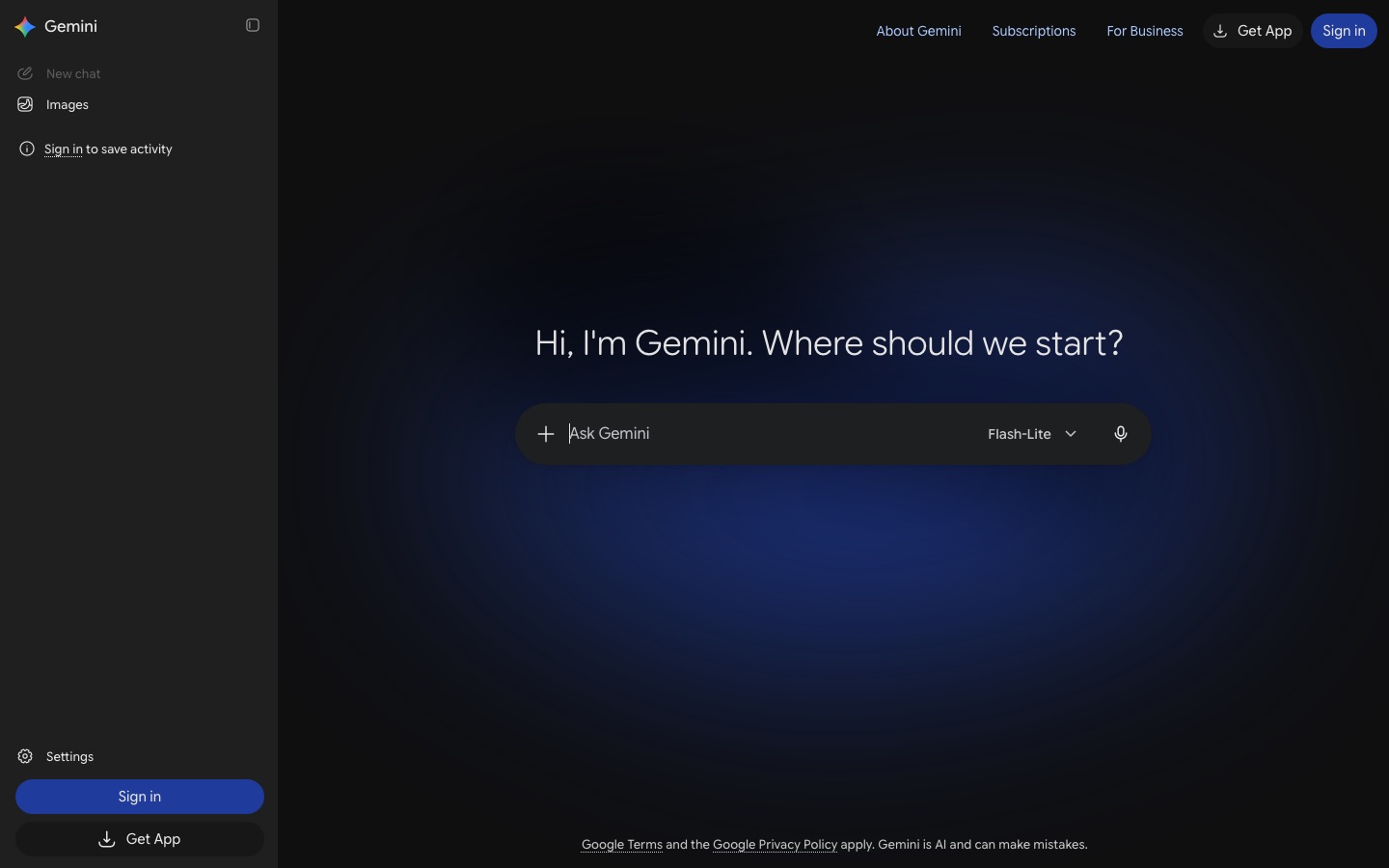
Gemini 4 Argon is Google's new flagship and the first Gemini 4 model. Below it sit Gemini 3.1 Pro and the fast Flash and Flash-Lite models. According to Google's subscriptions page, free users get Flash-Lite, AI Plus gets Flash, and AI Pro and Ultra get Gemini 4 Argon along with Pro and Flash. Gemini Argon also powers AI Mode in Google Search for paying subscribers.
The practical takeaway: both free tiers give you good but not frontier models. You pay about $20 a month to reach Opus 5.5 or Gemini 4 Argon. Claude's top model, Fable 5.1, costs extra on Pro, while Gemini's Argon is included on AI Pro.
Pricing: Claude plans vs Google AI plans (as of October 2026)
Prices come from Claude pricing and the Google AI plans page. US prices; other countries differ.
| Tier | Claude | Google Gemini |
|---|---|---|
| Free | $0. Sonnet and Haiku, memory, limits reset on a rolling five-hour window | $0. Flash-Lite, Deep Research, image generation, Gemini Live, Canvas, Gems, 15 GB storage |
| Budget | None | AI Plus: $4.99/mo. Flash, 2x Free usage, Gemini in Gmail and Vids, 200 Flow credits, 400 GB storage |
| Main paid tier | Pro: $20/mo, or $17/mo billed annually. Opus, Sonnet, Haiku, Research, Claude Code, Fable via credits | AI Pro: $19.99/mo. Gemini 4 Argon, 1M context, Veo 3.1 Lite trial, 1,000 Flow credits, 5 TB storage |
| Power tiers | Max: from $100/mo (5x Pro) or $200/mo (20x Pro), Fable included | AI Ultra: $99.99/mo (5x) or $199.99/mo (20x), Veo 3.1, up to 25,000 Flow credits, 20 TB+ storage |
| Teams | Team Standard $20/seat/mo annual ($25 monthly); Premium $100/seat annual | Gemini Enterprise Business from $21/seat/mo |
Google bundles far more non-AI value. AI Pro includes 5 TB of Google storage, YouTube Premium Lite and Google Home Premium, so if you already pay for Google One, the AI is almost free. Claude Pro buys depth instead: the strongest writing model of the two, Claude Code in your terminal, and Anthropic's agent features. Both services now meter usage the same way, with limits that refresh every five hours up to a weekly cap.
Value verdict: Gemini AI Pro wins on bundled value. Claude Pro wins if you will use Claude Code or care most about writing quality, and its annual price ($17 a month) undercuts Google's.
Claude vs Gemini, feature by feature
Writing quality
Public user feedback has favored Claude for writing for several generations, and that has not changed. Claude's drafts tend to have fewer stock phrases, better rhythm and a stronger ability to copy a voice you show it. It is also more willing to tell you an argument is weak instead of polishing it. That makes it popular for essays, reports, newsletters, fiction and anything you plan to publish with light edits.
Gemini writes clearly and has improved a lot with the 3.x and 4 generations. Its advantage is placement: inside Docs and Gmail it drafts in place, using your existing document or email thread as context, which saves copying and pasting. For quick replies and summaries inside Google apps, that convenience often beats raw quality.
Winner: Claude.
Coding
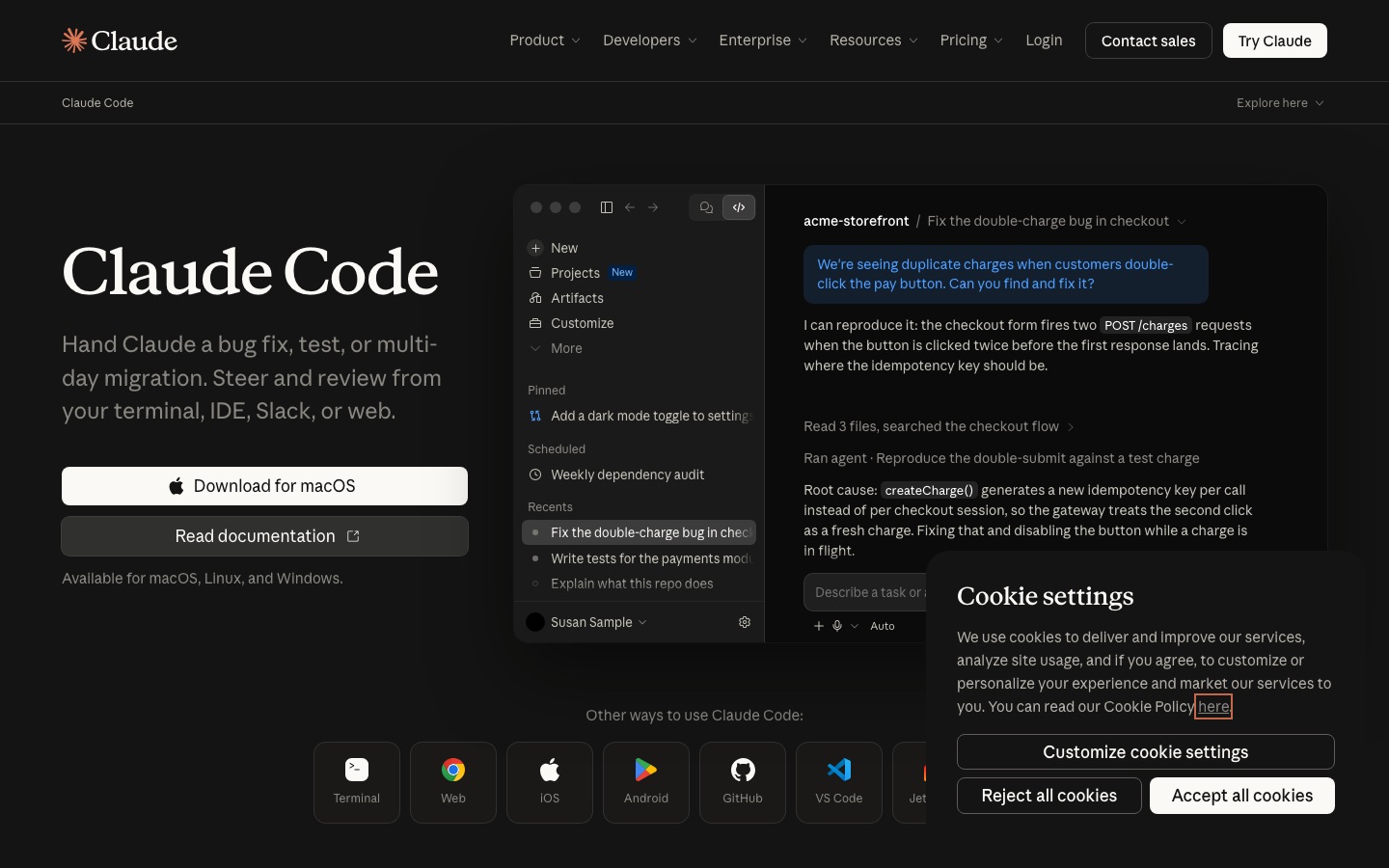
This is where Claude has the clearest lead. Claude Code is included with Pro and runs in your terminal, IDE, desktop app and browser. It reads your repository, edits files, runs tests, spawns subagents and works in parallel sessions, and on paid plans it defaults to Opus 5.5. Our how to use Claude Code guide walks through setup, and our Claude Code vs Cursor comparison shows how it stacks up against editors.
Google's developer story is spread across more products: Antigravity (Google's agentic IDE, with entry-level limits on AI Pro and higher limits on Ultra), Jules for asynchronous coding tasks on GitHub repositories, and Google AI Studio for prototyping with Gemini models. Gemini 4 Argon is a strong coding model, but the tooling around it is less unified.
Winner: Claude.
Long documents and context
For years Gemini held a clear lead here with its 1M-token window. That lead is gone. Anthropic now lists a 1M-token context window for every current Claude model, and Claude's pricing page says plans support up to 1M tokens depending on the model. Google lists 1M tokens on AI Pro. In practice, both can take in several long books, a large codebase or hundreds of pages of contracts.
Differences show up in how they use that context. Claude is known for careful recall and for saying when something is not in the document. Gemini's advantage is reach: it can pull files straight from Drive and Gmail without uploads, and Gemini Notebook (formerly NotebookLM) builds a source-grounded workspace with audio overviews. Our NotebookLM guide shows how to use it.
Winner: tie.
Research and web search
Both assistants search the web and cite sources, and both offer a research mode that reads many pages and writes a report. Gemini's Deep Research is available even on the free plan and can include your Gmail and Drive content when you allow it. Claude's Research is included on Pro and above, and its connectors can combine web results with your own tools, such as Google Drive, Slack, GitHub or a database through the Model Context Protocol (MCP).
Gemini also sits on top of Google Search, and AI Pro and Ultra add Chrome auto browse, which lets Gemini complete tasks on websites. Anthropic's equivalent is Claude in Chrome, a browser extension that reads pages and acts across your tabs.
Winner: Gemini, narrowly, for its free Deep Research and Google Search integration.
Images and video
Gemini is far ahead here. It generates and edits images with Google's Nano Banana models, including Nano Banana Pro, which are especially good at editing an existing photo while keeping faces and products consistent. Paid plans add video: AI Plus has basic video generation, AI Pro gets a limited Veo 3.1 Lite trial and 1,000 monthly credits in Google Flow, and Ultra gets full Veo 3.1. Google's newer Gemini Omni model, available as Omni Flash in Flow, generates and edits clips from any input.
Claude reads images, charts, screenshots and PDFs very well, but it does not generate photos or illustrations. It can produce diagrams, charts, SVG graphics and small interactive apps through Artifacts, which covers a lot of business visuals. For anything photographic, you need another tool; see our best AI video generators guide for video.
Winner: Gemini.
Agents and automation
Anthropic's agent features center on Claude Code, Claude in Chrome and Cowork, which Anthropic is rolling out to Pro and Max subscribers inside the Claude app to handle multi-step work across files and tools. Projects keep instructions and reference files together, and memory carries preferences across chats.
Google's agent features are spread across Gemini: Chrome auto browse on AI Pro and Ultra, Agent Mode in early access for Ultra, and Tasks in Gemini as an Ultra perk in select countries. Gems let you save custom assistants with your own instructions. For a broader look at agents, see our best AI agents roundup.
Winner: Claude for work and coding agents; Gemini for web and Google app tasks.
Integrations and ecosystem
Gemini's biggest advantage is that it is everywhere Google is: Gmail, Docs, Sheets, Slides, Drive, Meet, Vids, Chrome and Android, where it replaces Google Assistant and can see your screen. If you use Google Workspace, nothing else is this convenient.
Claude's ecosystem is built on connectors and MCP, the open standard Anthropic introduced for linking AI to tools and data. It connects to Google Workspace, Microsoft 365, Slack, GitHub and hundreds of third-party services, and developers can add their own. It is more flexible across mixed tool stacks but less deeply embedded in any one suite.
Winner: Gemini for Google users; Claude for mixed or Microsoft-heavy stacks.
Voice and mobile
Gemini Live is one of the best voice assistants available, especially on Android, where it can use your camera, see your screen and hand off to Maps, Calendar and other Google apps. Claude's mobile apps support voice conversations too, but they are not tied into the operating system. On iPhone the gap narrows, because neither app can integrate as deeply with iOS.
Winner: Gemini.
Privacy and data controls
On consumer plans, both companies let you control whether your chats are used to improve their models, and the defaults have changed more than once, so check the settings on your account. Google ties this to the Gemini Apps Activity setting and notes that human reviewers may read some conversations, so it advises against entering confidential information. Anthropic offers a model improvement toggle in Claude's privacy settings and incognito chats that are not saved to history.
Business plans from both vendors (Claude Team and Enterprise, Gemini Enterprise and Workspace) exclude your data from training by default. For sensitive work, use one of those.
Winner: tie. Read the current terms on your plan.
API pricing for developers
Anthropic publishes these per-million-token prices on its models page. Google's Gemini 4 Argon API pricing varies by tier and region, so check Google AI Studio or Vertex AI before comparing.
| Claude model | Input | Output | Context |
|---|---|---|---|
| Claude Fable 5.1 | $10 | $50 | 1M |
| Claude Opus 5.5 | $4 | $20 | 1M |
| Claude Sonnet 5.5 | $2 | $10 | 1M |
| Claude Haiku 5.5 | From $0.10 | From $0.50 | 1M |
Feature comparison table
| Feature | Claude | Gemini |
|---|---|---|
| Flagship model | Fable 5.1 (credits on Pro); Opus 5.5 default | Gemini 4 Argon (AI Pro and Ultra) |
| Context window | Up to 1M tokens | 1M tokens on AI Pro |
| Deep research | Research on Pro and up | Deep Research, including free plan |
| Image generation | No (diagrams and SVG via Artifacts) | Yes, Nano Banana models |
| Video generation | No | Yes, Veo 3.1 and Omni Flash |
| Coding agent | Claude Code, included with Pro | Antigravity, Jules, AI Studio |
| Office integration | Connectors to Google and Microsoft apps | Native in Gmail, Docs, Sheets, Drive |
| Custom assistants | Projects | Gems |
| Bundled storage | None | 5 TB on AI Pro |
| Cheapest paid plan | Pro, $17/mo annual or $20 monthly | AI Plus, $4.99/mo |
Pros and cons
Claude
Pros: best-in-class writing, careful long-document analysis, Claude Code included with Pro, Projects and Artifacts, flexible MCP connectors, cheaper annual Pro plan.
Cons: no image or video generation, top Fable model costs extra on Pro, no budget tier, less embedded in any office suite.
Gemini
Pros: native in Gmail, Docs and Android, Deep Research on the free plan, strong image editing and video, $4.99 entry tier, 5 TB storage with AI Pro.
Cons: writing less distinctive, developer tools spread across several products, best features assume a Google-centric workflow, human review of conversations unless activity is off.
Who should pick which
Choose Claude if...
You write for a living or publish what the AI drafts.
You code and want a terminal agent included in your subscription.
You analyze long contracts, reports or research papers and need careful answers.
Your tools are a mix of Microsoft 365, Slack, GitHub and others rather than all Google.
Choose Gemini if...
Your email, files and calendar live in Google Workspace.
You use an Android phone and want a voice assistant that controls it.
You want images and video from the same subscription.
You would pay for Google storage anyway, or want the cheapest paid plan.
Use both if...
A common split is Claude Pro for writing and coding with Gemini's free tier for Deep Research and quick help inside Google apps. Our upcoming Claude review and Gemini review cover each in depth, and our Claude vs ChatGPT and ChatGPT vs Gemini comparisons add the third big assistant to the picture.
FAQ
Is Claude better than Gemini?
For writing, careful analysis and coding, many users find Claude better, and Claude Code gives it a clear lead for developers. Gemini is better for Google Workspace and Android users, image and video generation, and value, since AI Pro bundles 5 TB of storage. On raw model quality, Opus 5.5 and Gemini 4 Argon are close.
Is Claude Pro or Google AI Pro better value?
Both cost about $20 a month. Google AI Pro includes Gemini 4 Argon, video credits, 5 TB of storage and Google extras, which is more bundled value. Claude Pro includes Opus 5.5, Claude Code and Research, and drops to $17 a month on annual billing. Pick AI Pro for breadth and Claude Pro for writing and coding depth.
Which is better for coding, Claude or Gemini?
Claude, for most developers. Claude Code is a mature agentic coding tool included with Pro, and Opus 5.5 is Anthropic's recommended model for long-running coding work. Gemini 4 Argon is also strong and available through Antigravity, Jules and the API, but Google's tools are spread across several products.
Does Claude have a bigger context window than Gemini?
Not anymore. Anthropic lists a 1M-token context window for all current Claude models, and Google lists 1M tokens for Gemini on AI Pro. Both can handle several long books or a large codebase in one conversation. Exact limits in the apps can vary by plan and model, so check your plan's details.
Can Claude generate images like Gemini?
No. Claude can read and analyze images, and it can create diagrams, charts, SVG graphics and interactive visuals through Artifacts, but it does not generate photos or illustrations. Gemini generates and edits images with Google's Nano Banana models and makes video on paid plans.
Is Gemini free and is Claude free?
Yes, both have free plans. Gemini's free tier includes Flash-Lite, Deep Research, image generation and 15 GB of storage. Claude's free tier includes Sonnet and Haiku with usage that resets every five hours. Opus 5.5, Gemini 4 Argon, Claude Code and video generation need a paid plan.
Final verdict
Claude is the better assistant for people whose output is words or code: it writes with more care, analyzes long documents carefully, and Claude Code makes Pro the best $20 plan for developers. Gemini is the better assistant for people whose work lives in Google: it is built into Gmail, Docs and Android, it makes images and video, and AI Pro's bundled storage makes it the better deal on paper. Start with both free tiers, run a week of real tasks, then pay for the one you keep reaching for.
Compare more assistants in the AI chat category and coding tools in the AI code category. If you build an AI tool we have missed, you can submit it for a listing.